
From Burnout to Balance: Understanding Cortisol, Oxytocin & Women’s Hormones
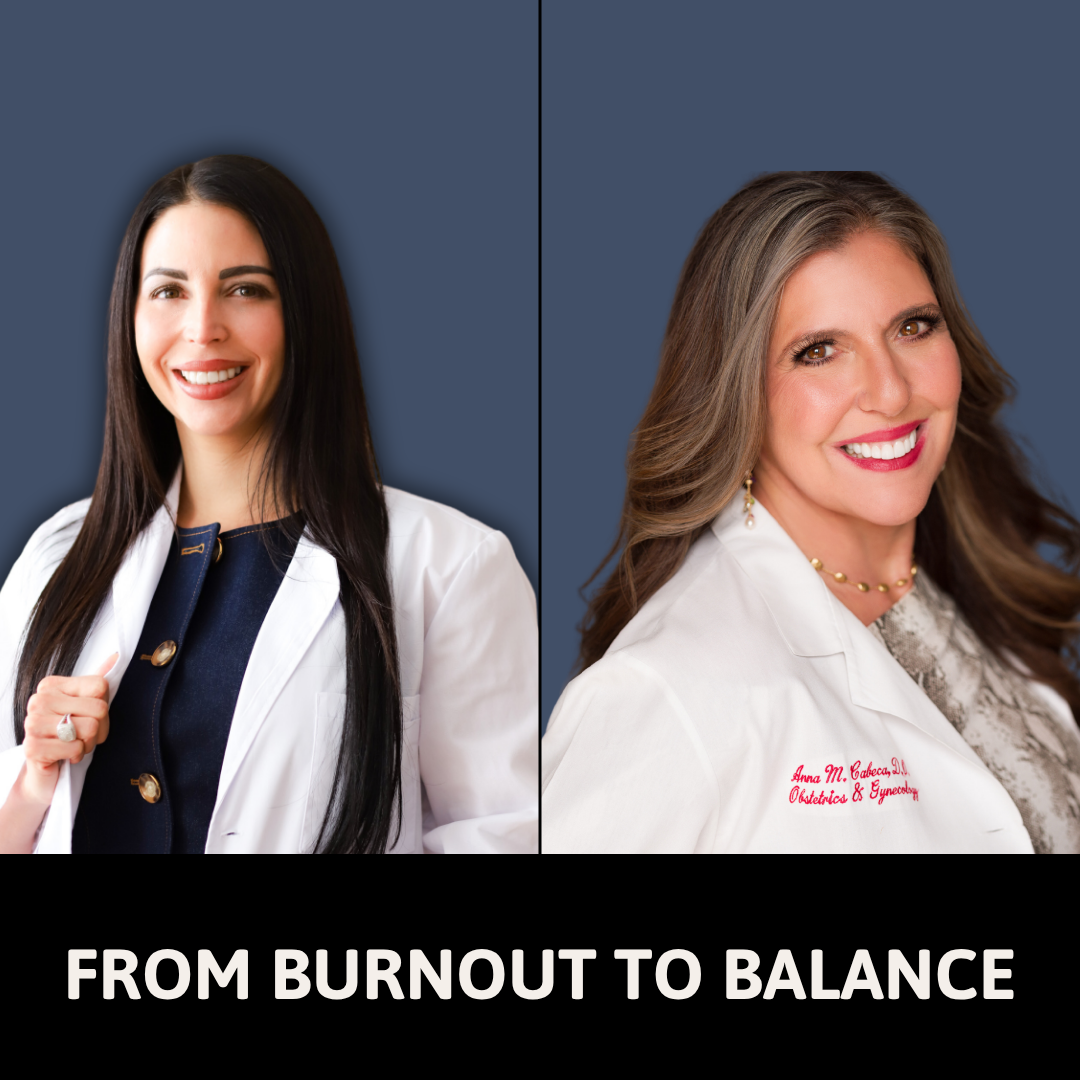
Dr. Anna Cabeca joins me to talk about why so many midlife women are told their labs are normal while they feel exhausted, foggy, and out of step with their own bodies. We talk about what shifts in perimenopause, how falling progesterone and insulin resistance can show up as everyday symptoms, and why Dr. Cabeca treats hormone imbalance as a metabolic question first.
We also look at how cortisol and oxytocin work together, what burnout can look like physiologically, and simple ways to support oxytocin. From there we get into keto and urine pH, what the research says about hormone therapy, and how the vaginal and urinary microbiome may relate to bladder symptoms.
Topics We Cover in This Episode:
- Why “normal” labs don’t always mean you feel normal
- What happens to progesterone and estrogen between ages 35 and 50
- Why hormone symptoms may start as metabolic ones
- How cortisol and oxytocin interact, and what burnout can look like
- Free, everyday ways to support oxytocin
- Why keto doesn’t work the same way for every woman
- What the research says about hormone therapy, and why the environment matters
- How the vaginal and urinary microbiome may connect to bladder symptoms
If you’ve been feeling tired, foggy, or dismissed when your labs come back normal, tune in to this conversation with Dr. Anna Cabeca. Subscribe so you don’t miss an episode, and share it with a friend who needs to hear it.
Resources:
Connect with Dr. Anna Cabeca: https://drannacabeca.com
Connect with Dr. Anna on Facebook: https://www.facebook.com/DrAnnaCabeca
Connect with Dr. Ana on IG: https://www.instagram.com/thegirlfrienddoctor
Order Dr. Cassie’s Book ‘Fix Your Gut, Fix Your Hormones’: https://guthormonefix.com/
Use code LISTEN10 for 10 % off your order on shopmodernendocrine.com
Additional Resources:
Check out the website
Follow Cassie on Instagram
Follow Cassie on Facebook
Follow Cassie on YouTube
Follow Cassie on TikTok
Disclaimer:
The information presented including any materials discussed, referenced, or linked within this podcast are for general educational purposes only, not the practice of medicine.
No doctor-patient relationship is formed from you listening to this podcast or utilizing any of the information provided.
I am a doctor, but I am not talking to you as your doctor. The information provided is not intended to diagnose or treat health problems or take the place of the professional medical care provided by your doctor.
If you are experiencing any health problems, including problems you believe have been touched upon in any respect within this podcast, you should consult your doctor about the problems without delay. You may ask your doctor whether he or she believes the information I have provided would be helpful to you, but you should still consult your doctor immediately and follow his or her medical advice as your treating physician.
I’m just here to provide you with basic knowledge about the issues we discuss so you are more aware of them and can better discuss them with your doctor.
Join me on the next episode as we continue our journey.
Transcript
Your labs are normal. Your doctor says everything looks fine. So why are you so exhausted? Gaining weight and feeling like a stranger in your own body? Stop blaming yourself and stop accepting normal as the answer. Today that ends. My guest today is Doctor Anna Cabeca, triple board certified ob gyn, best selling author of The Hormone Fix Keto Green 16 and Menopause and the woman you may already Know as the Girlfriend doctor, what we’re covering, we’re going to talk about why your metabolism falls apart in perimenopause and why eat less and move more. Flat out fails midlife women. We’re also going to talk about the cortisol oxytocin switch that decides your energy, your sleep, and your libido. We’re going to talk about what to eat when keto has failed you before. The truth about hormone replacement therapy, the myths, the evidence, and why one size fits no one is the truth And we’re also going to talk about simple things you can do to make that burnout that you feel or maybe that you’ve experienced go away. How do we fix that? Cortisol. Oxytocin dysregulation. Doctor Anna is sassy, blunt, and tells you the truth. Your labs won’t. If you’ve ever felt dismissed, this conversation is going to be for you. It’s what you’re waiting for. So let’s get into it. So today I have Doctor Anna Cabeca. I’m so excited. You joined us for the podcast. We’re going to talk about so many things women want to talk about. I know one of your specialties is cortisol and oxytocin. We’re going to talk about how we hormones change as we age. So I’m so excited to have you. Thanks for joining us.
I’m excited to have this conversation with you too.
Okay, so first of all, I think it’s best if you kind of just tell everyone a little bit about you. I say, try to condense everything you’ve done in five minutes or less, which I know will be very difficult for you. But I think it’s important for people to understand who’s talking to them. Right? You’re not some random Instagram influencer who just is going to make all of this up. So. Oh yeah, a little bit about your background.
Yeah. So I went to an osteopathic medical school, then trained at Emory University and specialized in ob gyn. So I tried to keep a holistic approach with me in my ob gyn training at Emory. And then I went on to continue to learn, realizing that my doctor’s bag was empty when it came to working in. I was in rural southeast Georgia as a National Health Service Corps scholar. And so the only female ob gyn in the vicinity. And I went on to board certified and regenerative medicine and then integrative medicine. I’ve written three books, but it’s only because my meth has become my message. That is the truth. My mess has become my message. I was diagnosed at 39. I wasn’t diagnosed as a workaholic, but I was. And then at 39, post traumatically with infertility and early menopause, which led me literally on a journey around the world, looking for answers, seeking answers, and with the grace of God, reversed early menopause and naturally conceived the thought I was told I would never have at age 41. And so when I came back into my medical practice on fire to really help other people empower their body and understand your diagnosis is not your destiny. And we have to address the underlying issues.
And it’s, it’s not fun when you’re in it. But I like that my mess became my message. I think I’m gonna start saying that I’m gonna still do it because I.
Know it’s not mine. I don’t know where I heard it somewhere, but yes.
No, I love that. And so you and you are so for the listeners, she is a practicing, she’s actually triple board certified, but she does practice medicine. She’s a medical doctor and she’s an ob gyn so knows a few things about hormones. And, you know, I think we were talking before the show, like listeners listening to this podcast, what are they really wanting? You know, most of our listeners are midlife and they’re kind of like you and I, they’re busy and they start developing these symptoms and they go to the people they love and trust their primary care doctor, their ob gyn. And unfortunately, a lot of people are not trained like you and I are. And so they just get dismissed. And I don’t think that it is on purpose, but it’s just like, hey, that’s a part of life. Keep going. And you know, you just keep doing that. And eventually you turn around and you can’t even see where it started. And so women in their late 40s, you know, they’re eating well, they’re training, they’re doing the same thing they did in their 30s. But now they’re gaining weight. They’re exhausted, they’re foggy. What is actually happening hormonally in perimenopause? Like what is why are they having declining estrogen? Why is their insulin high? Like, what is going on?
Well, again, it can be multifactorial. We say it’s just because of our ovarian aging, but there are other things that can interfere. And here I’m just privileged to talk with you, Cassie, because you’re endocrinologist with integrative and functional background. Like what, a unicorn, right? Like what a unicorn to be, you know, to understand that depth of endocrinology with everything else, too. I think that’s so important. And so we have that ovarian aging that occurs from age 35 to 50. It’s estimated that we lose 35% of estrogen and 75% of progesterone, a huge amount. And we’re expecting not to feel that. Of course, we’re going to feel that. But the reason the progesterone is dropping so much is because of the decrease in follicles. So the luteal phase progesterone decreases. And with that decrease in progesterone the second half of the cycle, that’s when you have more anxiety irritability weight gain moodiness difficulty sleeping or constant fatigue. Those two weeks before the period. And I will say, if you only hate your partner two weeks of the month, it’s most likely your hormones, not necessarily your partner, but paying attention because physiology affects our behavior. So certainly there’s a component to natural ovarian aging, but it is these symptoms are metabolic problems until proven otherwise. All hormone imbalance has an underlying metabolic etiology until proven otherwise.
I love that. I like that too. So I think there are some good points to take away from there. Number one, you said 35% of our estrogen and 70% of our progesterone, we use that.
I win 35 to 50.
Okay. So if you’re listening to this and you’re 35 to 50 and you’re starting to develop these symptoms, I mean, that’s a big loss of hormones. And I think some people don’t realize all the things that hormones do for us, right. And so I think that’s where and even traditional doctors, like we’re not taught. I mean, you went to ob gyn residency, so maybe you were taught a little bit more. I went to endocrinology fellowship in like, we were taught very little about hormones. Maybe when you were going through training, it was better. But unfortunately, there’s a lot of doctors out there that just don’t understand. Women are losing hormones. What does that actually mean from a symptom perspective? And then to your point, metabolically, we start having issues as well. And I think just people need better answers. They need to understand what’s going on. So that’s why we do things like this. This is why we get on here and chat.
Yeah. It’s a mission, right? We want people to feel empowered in their body so they can make the best choices. That’s why I feel very fortunate to be here and to give this message and also to, you know, have been through some of the experiences that I’ve been through to learn to ask questions, to try to understand why. But and I think it’s so important because we see this, we hear Here, perimenopause. So if you think in our 30s to 50s, we’re losing 75% of progesterone and pregnenolone, a certain percentage of pregnenolone. These are the two mother hormones derived from cholesterol. So cholesterol is a good guy, not necessarily a bad guy. And so we make progesterone and pregnenolone from them. And these are neuroprotective. These are neuroendocrine hormones right. These progesterone is for brain protection mood. It stimulates Gaba receptors through the derivative to allopregnanolone derivatives. So we get more Gaba which is the neurotransmitter that gives you calm. And ah. And I was like have to make things easy for myself. So think of Gaba. Think of the rock group ABBA, think of the musical Mamma Mia! And it’s like, oh, this is feel good. That’s high progesterone. You’re like, what the hell is happening to me? Physiology affects behavior. And so we want to support our body’s natural production.
I look at it this way. I want to support the body’s natural production of progesterone as long as possible, and the body’s ability to use it, take it up so the receptors to support the receptor status, to take up that progesterone more efficiently during this time period too, because so much gets in the way. And I know you’ve talked about this on your show, hormone disruptors, toxins, plastics, mold, gut dysbiosis. I mean, you can’t heal someone’s hormones without healing their gut, you know, right here, your book, fix your gut, fix your hormones. Like, I can’t fix your hormones until I fix your gut. I mean, that’s so such a big part of it and understanding this concept of what’s happening, but this shift in physiology, that progesterone is dropping with it, you’re not sleeping as well because it’s decreasing melatonin. At the same time, you have more anxiety, irritability and brain fog, memory loss, all of those things. There’s a physiologic reason for it, and it’s important to understand because I say menopause is mandatory and natural suffering is optional. So when we support our body in all ways metabolically, nutritionally lifestyle and really do bioidentical hormones when appropriate, it really makes a huge difference.
I couldn’t agree more. And I also think stress, you know, when we’re talking about progesterone, I didn’t realize we lost 75%. That is a lot. I knew we lost it. And I know we lose it quicker than you would think because I take care of women in their 30s. And I was a woman in my late 30s. And I feel like when we were very stressed, and this is kind of what made me look into this. But the more stress you have, a lot of times, the worse you feel, and sometimes the faster you transition into perimenopause and menopause. And so there is actually a direct correlation I found between cortisol and progesterone. So if your cortisol is really high, it actually causes your progesterone to be lower. And so I think there are a lot of women struggling with that stress from all sorts of areas, though, it can be what we physically feel like. Oh my gosh, I have this to do list. I didn’t get done. It can be stress. Like we don’t give our body enough time to relax and recover. We’re not getting enough sleep. We’re not giving our body enough nutrition. Maybe we’re in a toxic relationship, whether that be physically, verbally, mentally abusive. And so it’s interesting to me, I’ve kind of seen this progression of women kind of going into perimenopause even sooner than we would expect. I’m curious to know, since you’ve practiced, do you feel like women are going like having perimenopausal symptoms and lower hormone levels more quickly, or is it that we’re just talking about it more?
Well, it definitely increases in infertility, which is a first indicator, right? And low luteal phase progesterone. So cycle day 20 somewhere between 18 to 21, depending on your cycle length could be different. But we look for peak progesterone mid-luteal phase progesterone levels. And we definitely see those lower. And post pandemic medicine is different than pre-pandemic medicine. And I really do the autoimmune issues, the increase in stress and things that affect your stress as isolation. And so still trying to recover from many of those things. And absolutely cortisol, we say the cortisol steal, like we rob Peter to pay Paul just to support our bodies. But also cortisol is made from progesterone, but also it’s negatively feeds back and suppresses progesterone production because it is not the time of fertility. So you have it working probably from both mechanisms of supply and demand mechanism and a suppression. The suppression is not time for fertility. So for me, that completely put me into early menopause and infertility when I was 39. And I mean, but who doesn’t have stress midlife? I mean, sometimes it’s the sandwich generation. It’s the, you know, you’ve got kids and God, you got to have a sense of humor. Is that all I have to say?
No, I completely agree. And and some women are just waiting longer in life to either get careers or start families or get married. And so, you know, some women, I feel like I’ll have women who come to me and they don’t even realize they’re going to have fertility issues because maybe they wait until they’re 35 or 36 to try to start to have a family. And, and so, yes, your eggs are gonna obviously, as we age, our, our eggs, our fertility will change. But it is somewhat alarming. I think the amount of infertility that we see in women in their late 30s, and to your point, zero progesterone or very low progesterone levels because of stress. And I know you talk a lot about cortisol, but you also talk about oxytocin, which I don’t talk a lot about oxytocin. It’s kind of the forgotten hormone. You should do a talk about that, maybe a Ted talk, the forgotten hormone oxytocin.
That’s a good that’s a good title. Yeah. Yeah. It’s the Queen mother of hormones. It is the queen mother of all hormones. And I want to say to, you know, the fertility issue and understanding. I mean, even the Buck Institute on brain longevity is looking at ovarian longevity. We know the longer healthier our ovary and recycle and our ovaries are naturally like the longer we can preserve ovarian longevity, the healthier quality of life and less risk of dementia, Alzheimer’s, all of those things. So the ovaries are so sensitive to so much. We know they’re sensitive to insulin. For those of us with like, I like to call them warrior princess genes or whatever that may otherwise be diagnosed with a label like PMS or PCOS. We have these amazing warrior genes. Your ovaries are very sensitive to the testosterone and you get an insulin. So you have this insulin resistance brewing, which affects the function of your ovaries. That is a really clear example of Example why a hormonal problem is a metabolic problem until otherwise determined, right? And so keeping healthy metabolic function is key for healthy hormonal function. And so always keep looking at the smallest and smallest ways I can make changes. So I’m at the mitochondrial level at the cell membrane level. I’m trying to figure all this stuff out. The less I can do to get the most results is my game.
And that’s true with ovarian longevity. So I want to emphasize that. And I wouldn’t even know about this. And certainly I know about oxytocin because in obstetrics we give pitocin, which is oxytocin, to help induce labor. And when we have breastfeeding moms, we recommend nipple stimulation so they can increase oxytocin or nipple stim during when your term to help with some contractions to get labor going. So that increases oxytocin and the sex orgasm increases oxytocin and so many good. So we know it’s a hormone of orgasm, a hormone of childbirth. And what people don’t realize, it’s a hormone of longevity, of resilience. We know that we get oxytocin from gratitude practices, safe community. And it’s a common thread in all the blue zones community connection that increases oxytocin. Healthy, safe, long, happy marriages, increases oxytocin, and is associated with longevity. What I didn’t know is that when we’re under stress, if I hadn’t experienced it myself, I wouldn’t have known to look for it. But when we’re under stress, cortisol goes up. And like, you just think about it, when cortisol is up, we’re in that fight flight or freeze mode, right? Like we’re in that sympathetic, really significant overdrive. Like think of yourself facing an enemy, right? You’re in that attack. You don’t need oxytocin on board. Oxytocin suppressed. No time to love my neighbor. Right? And that situation, I’m not going to feel like you’re in a fight.
You know, you’re in anger. You know, love is not the emotion that’s coming up here, right? And so cortisol goes up and oxytocin goes down. And when cortisol is up for a long time, the paraventricular nucleus in the brain says, okay, cortisol, you are frying me out. I know you’re like my life saving hormone. You’re, you know, natural steroid hormone, you know, but you’re breaking me down bone, muscle frying out my nervous system. So you gotta, you gotta stop. Right? So it suppresses the cortisol. Anyway, that’s my imaginary conversation. The cortisol gets suppressed. So now you’re in this dangerous place where cortisol is low and oxytocin is low at the same time. And what that feels like is kind of I used to love going into work and now I can’t stand it. You feel that feeling of burnout. You’re like, God, I know. I love my spouse. I love my kids. I don’t feel love for them anymore. I’m feeling really just disconnected. Did you go into your favorite grocery store and you made it out of the house, for instance? Your world starts to get small. You start to isolate. You see one of your long time friends, but you pretend they don’t see you. You hide. You’re like, I’m not. I’m avoiding social interactions. That’s a sign of this dangerous level. When cortisol is low and oxytocin is low, and it is that physiology of burnout.
I say it’s a physiology that contributes to divorce because there’s no connection there. There’s a disengagement versus a connection. And oxytocin is part of that glue designed to increase oxytocin for connection, longevity, healthy immune systems, muscle regeneration, all these great neuro cognition, all these great reasons to have oxytocin and we make it the best pharmacy in the world is within us, right? You have to have to remember that best pharmacy in the world is within us. And for me, it wasn’t until after I burnt out from my medical practice, after I divorced in 2010, that I started figuring this out. Like what happened here? I was so disconnected from PTSD, from this physiologic underpinning. When I started to see it, I started to see it in that war veteran, in that patient who was in a train accident and now feels completely disconnected. I started seeing it more and more and more in others. And that’s I really dug into all the research on it and all the things that we can do about it and the practices, the way to increase oxytocin. And this is why I call it the Queen mother hormone, is that when we increase, do the practices to increase oxytocin in general, that supports all our other hormone pathways, all our other metabolic pathways, hormonal pathways. It is seriously the queen mother hormone.
I love that, I love the analogy and all the stories you gave, because I do talk a lot about cortisol. And we do know to your point, we need it like we don’t. We need to be able to run from lions. We need to know when we need to be on heightened alert. But most people live that way constantly. And the balancing hormone to that, I guess we’ll call it is oxytocin. But there does come a time when you have been living in high cortisol levels too long. And then we see that we, you know, a lot of people call it adrenal fatigue. Some people call it, you know, lots of different things. But if you have experienced that, where things that used to make you happy no longer do this is probably what’s going on. Your cortisol is low, your oxytocin is low. We don’t for people that are listening just so that they understand oxytocin is not something that we check in the blood typically. Correct?
Correct. It’s very hard to check it in the blood.
So how would someone know me and my oxytocin is low? Or what could someone do to help that pharmacy within them increase their oxytocin.
Yeah, I have oxytocin quiz on my website because asking questions, you know, is one of the ways many of the things that I talked about. The other thing too, that can notice in people with low oxytocin is, you know, cold hands, pale skin, very anhedonia, like not finding pleasure in anything and, or oxytocin seeking behaviors that can be part of our survival mechanism to try to, for example, binge eating distension of the stomach increases oxytocin sex distension of the vagina, increases oxytocin orgasm increases oxytocin gambling. I don’t get that one, but it increases oxytocin. And so some of these addictive behaviors and shopping shopaholics that’s like self-medicating for oxytocin. So look at those things too. So have a quiz. There are labs. Meridian Valley Labs does a urine 24 hour urine. And we’ll measure the oxytocin in that too. Again, it’s fragile. And I would say, you know, when you take the quiz, you understand a little bit. I write about it in my book, The Hormone fix as well. And it is just, you know, understanding these symptoms to look at. But the anecdote is to conscientiously do more practices that increase oxytocin and they’re free. And we can also prescribe oxytocin. I’ve been doing that for more than two decades. So there’s trachisan, lozenges spray, and mostly I started using it for sexual health and orgasm. But then I started using it for PTSD, trauma, anxiety, and depression. So, and just to help with that connection, like, for example, my burnout physician coming home from the E.R.
and she has two kids at home and a husband, and she’s exhausted by the time she gets in the door and she’s still stressed her brain’s spinning about patients. So being able to supplement with oxytocin can help her get out of that habit initially and play music you like. Don’t listen to the news. Sing along in the car. Do these oxytocin increasing practices. So when you get home, you’re like, mommy’s home. You know I’m home. Honey, you know you’re in a better place. And also give yourself that time when you walk in from a situation like that to just regroup and do some self-care before you have to be full on for the rest of the household. That’s something that I learned much too late, I think, in so many ways, too. And we have that conversation of stress management, and I don’t like that term. We as women already manage enough things. We’re managing our business, managing our calendar, managing our menu, managing our kids, managing so much. Right? So I don’t want to manage anything else personally. And so I’m like, well, let’s play more. What’s our oxy play or increase oxytocin? Let’s do this. Let’s increase oxytocin as opposed as opposed to stress management. You’re doing the same thing. It’s just I’m using different words because it makes me happy.
I like that. So if somebody is listening, you said a couple things. So oxi play like ways we can increase our oxytocin. You mentioned taking it or you mentioned singing. So I guess taking it for people listening. There’s nasal sprays, there’s lozenges prescription only. Right. Is there a certain point where you would recommend that and people, when it is affecting them to a certain degree, or it just kind of individualized by person? And then what are some other things like exercise movement? Like what else can we do? You mentioned sexual intercourse. Like what else can we do to improve oxytocin?
Yeah. There’s so much we can do. And you just think of the things that make you happy. For everyone listening, think of the things that make you happy in your daily life. Like really? What brings a smile to your face? Say you walk in the door and your dog is like, so excited to see you. Right? And taking that moment to pet your dog, to enjoy that relationship because I don’t know. I’ve had four daughters. No one greets me like my dog greets me. Right? It’s the best feeling. Can you take the time to enjoy it? And then, you know, maybe it’s cooking that increases your oxytocin. Gardening, painting, singing, you know, dancing, swinging on a swing. I feel like I have to clarify that nowadays. Swinging on a swing and head massage, facial massage, body massage, positive touch, hugging, kissing, positive touch, welcome touch increases oxytocin and hanging out with your girlfriends. Having good community. A practice of gratitude, a gratitude practice, getting out in nature. All of those things increase oxytocin. Yeah. So those are really powerful ones. And it’s interesting how I figured that out too. Can I share it with you? Sure.
Of course. All of those things are free though.
I noticed all those things are free. That’s it. It’s all. It’s like, that’s the best. Our best pharmacy in the world is within us and we can make it. And sometimes it is one of those things you have to conscientiously get in the habit of doing it, and it pays off in spades. And the way I figured it out, because when I went through, I’d say a second menopause
at age 48, many, many years ago now I’m 60 now this year. And so when I was 48, I was going through a second menopause and my hormones were dialed in. I read the Women’s Health Initiative study and I knew estrogen was fine, transdermal was safer, and the progestin Provera, we should never have anyone on that medication. So I kept using bioidentical hormones and converted anyone who was on synthetic or not like when appropriate onto Bioidenticals. And so like I already had hormones dialed in, but I was gaining weight without doing anything different. I was literally a metabolic mess. I was Is stressed, depressed and my hormones were a mess. Well, hormones were dialed in at that point, but I was gaining weight. Thyroid was fine. Losing hair. All this and emotionally not present. It was chaos in my house as a single mom raising a wee one in elementary school, a middle school girl and a high school girl, and being the sole breadwinner for my family.
But the weight gain without doing anything different was the straw that broke the camel’s back. So immediately I went to low carb ketogenic eating. I was very familiar with keto, so my oldest daughter has seizures. I had studied that and used that in my neuro patients and my Candida patients, things like that. So I’m like, okay, no carbs for me. And then I always felt like I didn’t have keto flu because I knew how to manage that. I had my adaptogens and my mighty maca on board, but I had what I call keto crazy. Like I was just still that irritable. And so I checked my urine pH and it was as acidic as the pH paper would read. So I don’t know. I was basically peeing acid at that point. Ph urine should be seven or greater upon waking and when you go to bed at night, ideally. And that’s a good biomarker as important as your heart rate variability, in my opinion, as your heart rate, as your blood pressure. The urine pH tells us so much. We want to be metabolically healthy. We don’t want to have acid in our bladder. As a gynecologist, I don’t want you to have issues with incontinence, UTI, cystitis, and how many times you just get antibiotics and treatment and no one ever checks your urine pH, or you’re not asked to check your urine pH.
But luckily, every one of you here is because you’re self-educating and it’s important. So urine pH is really important. And I recognized that I added all the alkalizers, the bone broth, the greens, the beet greens, arugula sprouts, all the cruciferous vegetables for breast health and hormone detoxification, all those good alkalizing greens, low carb. And it started improving. And then I noticed on the mornings I did my gratitude journaling and or prayer meditation and or walk on the beach. My urine pH was more alkaline all day and I was like, wow, what’s going on here? That’s when I discovered the difference. So that was 2014, 2013, 2014 discovered that interaction between cortisol and oxytocin. Cortisol increases hydrogen ion secretion physiologically across the kidneys, the renal tubules. So that creates this acidic urine pH. I don’t care how good you eat. You can be vegan, macrobiotic and you’re stressed and your P and S I guarantee it. And then oxytocin is the opposite. So you can be like having a glass of wine with friends, maybe not eating the healthiest. And you’re, you’re an alkaline. So again, we want the combination. I call it keto green, but you know, you can have an alkaline urine, but oxytocin is that powerful.
It’s so powerful. And so by shifting into those oxytocin, increasing practices shifted my physiology. And how did that feel? I was like, all of a sudden, instead of yelling at the kids to get down for a bus and handing them something to eat on the way, or they missed the bus, and I’m like, we’re late anyway. Let’s stop at Starbucks or coffee shop or whatever. Or it went to kids coming down, having breakfast out the door with a smile on their face, catching the bus. Like, I mean, that’s how drastically my energy shifted. My capacity shifted. So for any woman listening, especially and man, that our physiology affects our children. It absolutely does. It’s magnetism, you know, and just like magnets can repulse or attract. And so this energy flow and that keto alkaline energy, or keto green is what I call it, is a really powerful physiologic state that feels like the peace that surpasses all understanding, right? Being the eye of the storm like nothing else in my outside world changed but my inner world changed and the 18 of the 20 pounds came off in six weeks. So that was a bonus. But I loved how I was feeling, and that’s why I started my programs and writing my books and all of that about this. I lost that.
That’s fascinating. So the keto green is how you lost the weight with the keto, but putting alkaline food into your diet as well. So I was going to ask you, because a lot of people talk about keto and keto doesn’t work for everyone. And so maybe this is why this is what you’re saying. Like some women do keto and it still doesn’t necessarily work. So these could be women who maybe are depleted of oxytocin and have very acidic urine, and they need to just change some of the food that they’re eating as well. Also their, their gratitude practice.
So that’s so important. And again, when we are keto, this is what I learned, right? Like it can long term increase cortisol. It’s very acidic if you’re not balancing your pH or Alkalinizing. Look, men in the keto world came from men predominantly. Right? And so they have ten times as much testosterone. They’re not going to get into a catabolic state as women will. But when we start affecting our physiology in that way, again, test don’t guess. Let’s see what works for you. But for me, ketosis is healthy, high quality protein, ideally grass fed free range, no antibiotics injected as much as possible. Right? And healthy fats, olive oil, avocado. You know, great proteins like salmon, alkalinizing greens like arugula, broccoli, sprouts, a lot of herbs. I love fresh herbs or spices. I mean, spices are medicinal. These are medicinal menus and a fermented food that constitutes a keto green plate. So olive oil, salt, you know, good salts, things like that. I mean, that constitutes a keto green plate. So it’s very balanced. And usually in mid-life, I get my clients to eat maybe two meals a day instead of three meals, and definitely no snacking can do three meals.
Depends on your timing and your lifestyle too. But breaking fast with, you know, ideally anywhere between a 13 to 16 hour fast between dinner the night before and breakfast and, you know, having shorter and longer fasts to we want to keep that metabolic flexibility up. So my keto grain approach is really adding in those alkalinizing principles and the lifestyle factors that help support our physiology, a low inflammatory physiology, and creating ketosis, which helps support insulin sensitivity because all of us will become more insulin resistant as we age unless we’re actively addressing it and changing our nutrition and lifestyle to support insulin sensitivity. And that’s so important. And so insulin resistance creates all kinds of metabolic problems. You know, the number one reason for unrelenting hot flashes is insulin resistant, not estrogen deficiency. That can be it too. But if you on estrogen and they keep upping your doses and you still have hot flashes. I would say I’m 99% sure that it’s because of insulin resistance. So we’re going to pay attention to those things, the underlying metabolic physiology. And that’s where I love bridging lifestyle and ancient practices with science too.
I love all of those things. I think those are all very. You have me thinking of several things. I do want to pick your brain for a minute about hormones, because hormone replacement is very misunderstood. There’s decades of fear and you made a comment about, you know, you’re going. I don’t remember how you said it, but you’re going to go through menopause. And you either do it, you know, with symptoms or without. However, you said that it was it was better. It was better worded than that. But, you know, I mean, you can choose to try to gracefully go through menopause or you can replace hormones as needed and, and maybe feel a little bit better. There’s a lot of symptoms that women have though, as they you know what kills me as a woman going through it and then taking care of women are all the symptoms that we develop that are just I mean, some people go through it so well and some people, you know, I saw a lady yesterday who was so dizzy. This is very strange, but I mean, so dizzy, you know, thought she had a stroke, saw an ENT, I mean was dizzy for like 18 months, could barely get out of bed, had lost a bunch of weight, was then was so depressed.
To your point, her cortisol was probably high for so long and her progesterone is low. And then her cortisol went low. And she has no oxytocin because she’s not doing anything. Long story short, we eventually got her on bioidentical hormones and I saw her yesterday and she goes, my dizziness went away and I got out of bed the last three days and I’ve seen the sun and I’m just so happy I’m not dizzy. And I was like, thank God, you know. And so I want to talk to you a little bit about HRT and get your kind of take on this, but I also want you, when we’re talking about this, to talk about the symptoms, that it helps because we’ve been talking about a lot of things, you know, oxytocin and just being not burnt out or grateful. Sometimes a little bit of hormone therapy can help people with that as well. Their mood and just, you know, so talk to me about that. Like, are all hormones bad? Should some people be using them? What are your thoughts on that?
Yeah, no, it’s such an important question because, you know, I trained pre women’s health initiative. So I was in, you know, I trained in ob gyn in the 90s. And so I was aware of hormones and hormone use. We had estradiol as a bioidentical option and prometrium was just coming out. And so Prometrium was available, but the big sellers were prempro. That’s oral estrogen from pregnant mares urine. It’s about 30 estrogens and Provera, which is medroxyprogesterone acetate has the word progesterone in it, but is not progesterone. It is a progestin. And, you know, I haven’t had any patients on that in over 20 something years now. So I mean, can we have safer options? So first of all, I want to say, you know, I was National Health Service Corps, I was sheltered, I was in my solo practice. I had my head down. I was a researcher. I was practicing hormonal management. I read the studies as they came out and analyzed the data. And I’m like, okay, we use safer options. And I read the study on the safer options, and our bodies produce the three main estrogens. We produce many estrogens, but the three main ones we produce are E1, E2, and E3, and our body produces progesterone. And more importantly, let’s go higher up because those are minor, minor hormones. I mean, powerful and mighty, but they’re still minor hormones. We produce testosterone, we produce DHEA from DHEA, our adrenal and ovarian hormone. So our ovaries and our reproductive years, Our ovaries make 50% of our DHEA. We measure DHEA sulfate in the blood, and our adrenals make the other 50% off.
And as we go through perimenopause menopause, it becomes even more important to support our adrenals because they’re picking up the slack on what the ovaries are producing. And so this is an important hormone to evaluate and, and look at as well. Prohormone. We call it a prohormone because from DHEA we make testosterone and estrogen anyway. So paying attention to the bioidentical hormones, paying attention to what we can use, and any anti estrogen talk I really consider misogynistic. And I’ve been saying this for years and it is like, you know, estrogen is not the bad guy. There’s not a study that shows, I mean, there’s conflicting small random study, but the majority studies show estrogen has no increased risk of breast cancer. The Women’s Health Initiative study showed it. Even oral estrogen, which is a less favorable form, especially as we age. We want to move to transdermal and vaginal, very safe testosterone transdermal very very safe as physiologic levels. Progesterone prometrium bioidentical progesterone oral progesterone and or topical progesterone or pregnenolone are things I’ve been doing for decades. And so these are very, very safe options. And they help us. They protect us. But you can’t do that and think that’s going to be the whole answer. It takes more than hormones to fix your hormones. And so we have to address the underlying cardiometabolic conditions through lifestyle, fixing your gut, addressing these, you know, addressing the gut microbiome is a huge piece of healthy hormone detoxification and metabolism. And so you have to do these things. In addition, and I created products with progesterone and DHEA in them to help women with access.
So I will be using my balance cream till I die. That’s progesterone and pregnenolone and tripeptide for wrinkles and sunspots. Because if you’re going to use a cream, let it be, you know, let it be, have some cosmetic benefit anyway, and then we’re more likely to use it. True for me, true for so many of my patients. But that was some of the reasoning behind my formulation. But you know, like that’s helpful for sleep. It’s good for men, for anxiety, for women, for anxiety. Postpartum progesterone is a great antidepressant. And understanding the physiologic shift and supporting nutrition and lifestyle and bioidentical supplementation in safe forms, it’s important for life. Like when we have thyroid issues, we don’t worry about supplementing thyroid and there’s not an age limit. We don’t stop your thyroid meds at 65 and insulin, we use bioidentical insulin, right? We don’t stop that at 65. Like some of this doesn’t make sense. And I’ll never forget, I got to do one more tangent for you, Kasey. It’s so I was in residency at Emory, and I had. I was delivering a woman’s third. Second trimester pregnancy loss. She was a crack cocaine addict. A lovely 26, 27 year old woman. And she was a NYU graduate. She was from a good family in Atlanta. And I was like, what is going on? I mean, you’re so smart. You’re blessed in so many ways. And she said, Doctor Anna. Academia does not mean common sense. And I love that saying because. Like, yeah, academia does not mean common sense y’all. Oh and the menopause is mandatory and natural suffering is optional.
Menopause is mandatory and natural suffering is is optional.
Suffering. There’s so much we can do.
Yes. No, I agree and I think I like that too. Any anti estrogen talk is. Is just so fear based. And to your point the studies don’t show that. And I like to say you know hormones are a reflection of the environment you put them in. So it’s not the hormones fault. But if we’re shoving excess amounts of hormones into a very toxic environment and our body doesn’t have the ability to break down estrogen correctly, our estrobolome or the bacteria in our gut that are supposed to be processing estrogen is not working. Our insulin levels are high, our cortisol is high, and all of that is causing or shunting hormones to metabolize to maybe not the best metabolites. I don’t want to say toxic ones or cancerous ones, but, you know, I mean, the hormone is only as good as the environment that you put it into. And so I think that’s where it’s also really important. It’s not like a magic wand that we wave and, oh, here, Miss Anna, here are your hormones. You’re going to be just great. You know, you have other things you have to do too. You still have to sleep. You still have to do things you enjoy. You still have to eat well. You still have to move your body. And so I just feel like there is a lot of misinformation and I feel so bad for patients. That’s why I love when people like you agree to have conversations like this, because patients want information. They’re trying to get it from different places and they hear so many different things. So I think things like this are really valuable.
Yeah. Me too. Thank you. Yeah.
So the only other thing that you made me think of when you were talking to a lot of patients. So if you’re listening to this, a lot of women as they go through perimenopause have a lot of bladder issues. They feel like they’re having UTIs. And then maybe they go to the doctor and they’re not. And so that’s one of the things I actually had several questions about this recently. And typically my thought was, okay, well, it’s probably an estrogen deficiency, right? Maybe you need some vaginal estrogen or, you know, you need some systemic estrogen. But when you were talking about the alkaline and the acidic urine, I started thinking maybe some of these women have very acidic urine and that could possibly cause them to have these symptoms, you know, randomly where it feels like they have UTIs and then they don’t. What are your thoughts on that?
Yeah, I think that’s a huge part of it. And it needs to be studied more. It really does need to be studied. Again. Certain bacterias can be alkaline forming. So that can skew the data. But on average, our urine should be like a good urine pH of 77.5. Again, we don’t want acidic acid sitting in any bowl of anything long term. Right. It’s going to break it down. It just makes sense. It’s just physics. And so what I’ve been studying over the past more than the last decade, really digging into the microbiome of the bladder and the vagina and understanding like just recently, like the last two years, a study came out was published in the Harvard News that looked at the uro biome. I was like, oh, what a great word. So can we call the vaginal microbiome vagi biome? So we have the uro biome about the urethra and the bladder, the uro biome. And it is the same bacteria that is in the vagina. But when you have a dysbiosis in the natural occurring uro biome, or you don’t have that protective Lactobacillus species, specifically crispatus, iners, jensenii and Gasseri and Rhamnosus.
When you don’t have those, you have more incontinence and urgency. And it’s like, what have we been doing? Right? Like, it just blows my mind. I, you know, I can’t tell you how many sling procedures I used to do right, for incontinence and things like that until I learned hormones. And that’s why I created my product, which has DHEA, which at the cellular intrinsic level converts to testosterone and estrogen and DHEA. In my experience, works better than estrogen alone to help restore the natural moisture and secretions. So that really is that combination. I would say with pelvic floor exercises, you can turn the hands of time back. And now adding those specific strains of vaginal targeted microbiome or bacteria to support the vagina so that women will say, gosh, just everything feels so much better down there and they’re not getting up at night to pee anymore. Their incontinence urgency Symptoms are gone. The microbiome has so much to do with this, and I’m glad you asked because a little passionate about this topic.
Yeah, I mean, I think that so now I’m thinking like, maybe you have one of these products and I just don’t know. But now I’m thinking like, maybe we need vaginal inserts that have estradiol or forms of estrogen, maybe some DHEA and some good vaginal flora that we can reinoculate our vagina with. Right?
Yeah. And that’s because I created a water based lubricant that’s microbiome friendly. It’s aloe and hyaluronic, but it’s microbiome friendly and pH friendly. Anything you get for the vagina has to go through a 510 K approval. And it is that’s that is a challenge. So the FDA has to approve anything going into your vagina as considered like a lubricant is, you know, one that’s at 510 K or FDA approved is approved as a medical device. Don’t get me started on this. All right. And so my product, it’s DHA and plant stem cells from the alpine rose. It’s an amazing product. I created it and brought it to market in 2016 and patented the formula. And this just topical clitoris to anus. I mean that tissue atrophies and we want to keep it healthy. Blood supply, nerve supply. So with pelvic floor exercises this is key and it helps with moisture and that with reseeding. So my VB probiotic is vaginal and bladder targeted probiotics or bacteria probiotic bacteria to help support and reseed the vagina and the bladder. And it’s taken orally and through transference ends up where it does. I say by magic, but I check I’ve been monitoring now before. As gynecologists, we could only. Well, way back I used to look under a microscope at the bacteria looking for infection, white blood cells, bacteria, trichomonas, things like that.
Right. Then we were able we just do a swab and we send it to a lab and they check and only for STIs. But now, over the past few years, we’ve been able to check past couple years really for healthy bacteria to look. Do you have those healthy Lactobacillus. And I will tell you, even women that I checked in their 20s, they do not they do not have the protective bacteria. So that increases susceptibility to infections and HPV, etc.. So we know healthier lactobacilli targeted those key strains and a lower urinary pH because the vaginal pH needs to be acidic. The bladder, you know, seven you know, it will vary throughout the day. But we want that to not be acidic. We want that to be neutral seven around seven the vaginal pH is healthy at 3.5 to 4 because you want it to defend and kill off any parasites or viruses that are coming into your womb. Right? So it makes sense. And the healthy bacteria that live in that Environment, we have to reseed that bacteria. That is first line defense. And we need we need more research in this area.
I think that’s so fascinating. I agree, I have a lot of these women who come to me with these symptoms. And when we look at their gut and a lot of times their gut microbiome is very out of balance and we will fix it. And sometimes that helps, but sometimes it doesn’t. And, you know, it makes me wonder a lot of these interstitial cystitis patients, do they really have interstitial cystitis or do they have a microbiome issue in their bladder and or their vagina that
just needs to be fixed. And instead they’re suffering and they’re taking fish oil and all these random things people tell them to do because nobody really has a good answer for them. So I don’t know, maybe I nominate you to do all this.
I keep talking.
About Doctor Anna.
Well, and I used to treat interstitial cystitis with bladder distention and steroid infusions and ozone therapy. I mean like all that invasive stuff. Now I don’t I’m like okay, my By foundational is Java BB probiotic. Avoid any chemicals. Clean detergents. Really be careful what we’re putting on our skin around our body, in our body. Be very discerning with all of that, choose your toxins wisely, as I like to say.
Choose your toxins wisely. Yeah. And we’ll get the link for your products to put in the show notes, because I’m sure people would love to check this out. So we’ll get those links for sure. So if you guys are interested in looking at Doctor Hannah’s products, we’ll make sure that those get in the show notes. I think this has been a great interview. I’ve loved. You’ve taught me so much and I want to close really quickly by asking you three questions. I ask everyone this. It’s like the first thing that pops in your head. Don’t overthink it because people love this. And then we’ll let you tell everyone where they can find you. But what is one food that’s most beneficial and why?
One food like first thing that came to my mind is what I just ate. And that was smoked salmon. I’m like soaked, smoked Norwegian. Wild caught salmon is so good in omega threes and high protein and I just ate it. So it’s on top of mind.
Okay. I love that smoked salmon. What is one thing anyone listening to this podcast right now can do that’s 100% free? That would help them improve their health. We talked about lots of stuff.
What Oxi play. Anything you can do to increase oxytocin. So find the lighter side, you know, laugh at yourself and you can play more.
I like that too. I think we’re all just so like go go go go. I’m the worst to my dog is the sweetest when I come home and sometimes I’m like, come in the door. And she’s all trying to, you know, be happy to see me. And I’m telling my husband, like the four things on the top of my mind. So I need to be nicer to my dog whenever I come home.
Well, enjoy that.
Just like no.
And yeah, just take that moment to just three breaths and enjoy that moment with yeah. Because I’m saying it from a place I’ve had to learn to get out of my head, get in my body in the present moment. And it is still a practice.
Yeah, yeah. And what is one thing you wish you would have known about your health 20 years ago? You would have done differently?
Really? Dial in my sleep. You know, I’m like a Obi solo practice call 24 hours a day, seven days a week for so long, and is really dialing in my sleep. And I want to give a second one. If it’s not a hell yes, it’s a hell no. My friend JJ Virgin told me that it’s not a hell yes. It’s a hell no. Really set some good boundaries.
I love that JJ also told me that a couple of months ago, and that’s been like, have a little sticker on my computer screen that says that because I sometimes tell everyone yes. When I should tell some people no. So I love that. Well, you so, so thank you so much. I know you’re very busy, so I’m glad that you came to share all of this information with our audience. I know they’re going to love it. And so I appreciate that. And I also love when I meet like minded people and people who are just out there trying to educate the world and make the world a better place. So I appreciate what you do. I appreciate your time. Tell everyone where they can find you. Like social handles, podcasts, your books, whatever you want us to know.
Yeah. Thank you, thank you. This has been fun for me too. And when you find a like minded person, you’re like, okay, you know, like, have my tribe, right? I have my tribe. And yeah, and as JJ also says, rising tide lifts all boats, right? We’re in this together. It’s, you know, and that’s what’s so important work together to do this and that will affect more lives. So I appreciate everything you do. I appreciate you having me on. And for all of you listening, please connect with me on social media at the Girlfriend Doctor and on LinkedIn at doctor. Anna Cabeca, DRANNACABECA. My website is dranna.com, so doctor anna.com. And if you go to forward slash tribe, that’s where it gives some insider bonuses. So doctor anna.com/tribe. So there’s some insider bonuses in there for you that like my ten day breeze through menopause and some info on products free trials, things like that too.
And I’m sure your quiz is on your website as well. The oxytocin quiz.
Yes. Just search in the I don’t even know where it is right now, but search the toolbar. Oxytocin quiz. Yeah.
All right. Well, thank you so much. I look forward to meeting you in person soon since we live so close together. But thanks.
I look forward to it.
My mess has become my message. I love that from Doctor Anna. I feel the exact same way. That is why I’m here. That’s why I do this. That’s why I created Modern Endocrine. Remember? Please, please, please remember. Your body isn’t broken. It’s adapting. And there’s a reason for every symptom that you have your hormones, your metabolism, your mood, they are all one symptom. They need to be treated like one. And also remember, work with your changing biology. Don’t work against it. Your blood sugar, your stress. These are all lovers you can start pulling today, but we need to make sure that we’re working with our body and making sure that we understand that it’s one whole system. I loved how she put in perspective that aging and menopause are something that’s going to inevitably happen, but it is your choice whether you suffer through that or not. If anything that you heard today hit home. If you don’t want to suffer through these menopausal or perimenopausal changes, if you’re struggling with your weight, your energy, your sleep, your mood, or you’re just plain sick of being told everything is normal and you don’t feel normal, I want to personally invite you to come and work with modern Endocrine. That is exactly why I built Modern Endocrine. We dig into the root cause of your hormone and metabolic struggles, and we don’t stop until we find answers.
Book a discovery call right now on our website, www.endocrine.com. Just a real conversation about what we do and whether we are a good fit. We are licensed in 46 states, so whether you’re in Dallas or you’re in Delaware, we can likely help you. The link will also be in the show notes. If this episode gave you an aha moment, be a girlfriend. Send it to someone who needs to hear it. Your sister, your best friend, a coworker who’s been running on fumes. You never know what one conversation can change while you’re here. Do me a favor. Like follow and subscribe so you never miss an episode. And please leave me a quick review. These few seconds tell the algorithm that this message that I am bringing to you matters, and it helps more women find the show. And finally, if you want to go deeper on fixing your hormones from the inside out, grab my book, fix your gut, fix Your hormones. It’s a best seller on Amazon, and it’s now available on Audible and Spotify. Read by me so you can listen while you walk, drive, or cook. The link will also be in the show notes. Until next time, stop settling for your normal. You deserve to feel like yourself again. Take care.